Choosing an industrial coupling is not just about finding a component that fits two shafts. The right coupling needs to match the machine's power, speed, load, alignment and working conditions. A poor selection can lead to vibration, premature wear, frequent maintenance and avoidable downtime.
This is why choosing the right Industrial coupling manufacturer matters. A reliable manufacturer should do more than supply a product. They should understand your application, offer suitable coupling options, maintain consistent quality and help you select a solution that works reliably over time.
Whether you are purchasing couplings for new machinery, replacing an existing component or sourcing products for regular industrial use, there are several factors worth checking before you make a decision.
Understand Your Industrial Application First
Before comparing manufacturers or asking for prices, understand what the coupling needs to handle.
Start with the basic operating information of the machine, including:
- Motor or engine power
- Operating speed in RPM
- Shaft diameter
- Required torque
- Shaft alignment
- Load characteristics
- Frequency of operation
- Shock or vibration levels
- Operating temperature
- Available installation space
These details are important because the same coupling may not be suitable for every machine.
For example, equipment operating continuously under a steady load may have different coupling requirements from machinery that experiences frequent starting, stopping or sudden changes in load. Similarly, an application with vibration may require a different coupling arrangement from one where accurate shaft alignment is the primary concern.
A good manufacturer should ask about these conditions before recommending a product.
Look for the Right Coupling Types and Applications
Industrial machines use different coupling designs depending on their operating requirements. Understanding the basic coupling types and applications can help you discuss your requirements more clearly with a manufacturer.
Tyre Coupling
Tyre Couplings use a flexible element to transmit torque while helping absorb vibration and shock. They can be suitable for applications where smoother power transmission and flexibility are important.
Rigid Coupling
Rigid Couplings provide a firm connection between shafts and are generally considered where the connected shafts need to remain accurately aligned. Proper shaft alignment is particularly important when using this type of coupling.
Pin Bush Coupling
Pin Bush Couplings use flexible bushes around the pins to transmit torque while helping manage vibration and shock. They are widely considered for general industrial power transmission applications.
Spacer Coupling
Spacer Couplings provide additional space between connected shafts. This arrangement can be useful where the machine design requires greater shaft separation or easier access around connected equipment.
Star Coupling
Star Couplings use an elastomeric element between the hubs to provide flexible torque transmission. Their compact design makes them suitable for a range of industrial machinery where flexibility and vibration damping are required.
Star Coupler
Star Couplers are designed for dependable torque transmission through a flexible coupling element. The appropriate size and configuration depend on factors such as torque, speed, shaft dimensions and the machine's operating conditions.
The important point is that coupling selection should begin with the application. Choosing a product simply because it is inexpensive or readily available can create problems later.
Check the Manufacturer's Product Range
A manufacturer with a suitable product range gives you more flexibility when selecting a coupling.
Instead of trying to use the same design across different machines, you can compare products based on the actual requirements of each application.
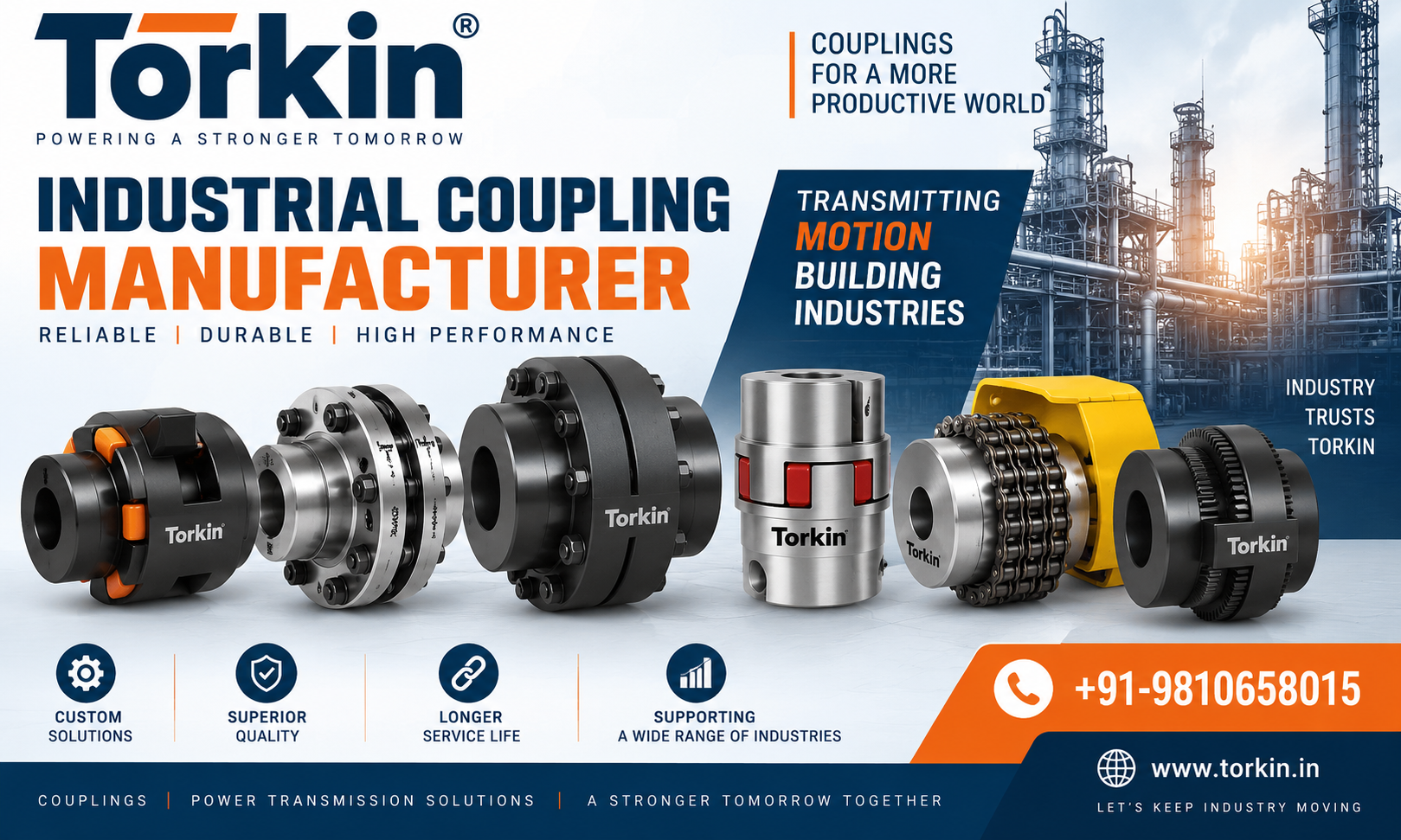
For example, Torkin manufactures Tyre Couplings, Rigid Couplings, Pin Bush Couplings, Spacer Couplings, Star Couplings and Star Couplers for different industrial requirements.
A broad product range can be particularly useful for OEMs, maintenance teams, distributors and industrial buyers who need different coupling solutions for multiple machines or applications.
Pay Attention to Manufacturing Quality
The performance of an industrial coupling depends on more than its basic design. Manufacturing accuracy and consistency also matter.
When evaluating an Tyre Coupling Manufacturer, look at the manufacturer's approach to quality control. Important areas include material selection, machining accuracy, dimensional inspection and product testing.
Consistent manufacturing becomes even more important when you purchase couplings regularly or require multiple units with the same specifications. Small differences in dimensions or fit can create unnecessary installation and maintenance issues.
A manufacturer with proper quality-control processes can provide greater confidence that the product supplied will meet the required specifications.
Consider Heavy-Duty Operating Conditions
Some machines operate under demanding conditions where standard components may not be enough.
Applications involving high torque, continuous operation, heavy loads, frequent starts and stops or sudden load changes may require heavy duty industrial couplings designed for demanding service.
However, heavy-duty does not simply mean choosing the largest or strongest coupling available. The coupling still needs to match the machine's torque, RPM, shaft dimensions and operating conditions.
For this reason, share complete application details with the manufacturer rather than selecting a coupling based on shaft size alone.
Ask About Customization
Not every machine uses standard dimensions.
You may have a particular shaft diameter, bore, keyway, shaft spacing or installation limitation that makes an off-the-shelf coupling unsuitable.
In such situations, customization can make installation easier and provide a better fit for the equipment.
When selecting an industrial coupling supplier, ask whether they can support application-specific requirements. This can be especially useful for OEMs and businesses replacing couplings on older or specially designed machinery.
A manufacturer that can understand and accommodate specific requirements can be more valuable than a supplier that only offers standard products.
Check Delivery and Supply Capability
A coupling may be a relatively small component, but its availability can have a significant impact on machine downtime.
If a replacement coupling is not available when needed, production may remain interrupted for longer than necessary. For OEMs and distributors, inconsistent supply can also affect delivery commitments to their own customers.
Before placing an order, ask about product availability, manufacturing lead times, bulk-order capacity and delivery schedules.
A dependable manufacturer should provide realistic information about delivery rather than making commitments that cannot be maintained.
Don't Ignore Technical Support
Industrial buyers sometimes focus heavily on product price and overlook technical support.
If you are unsure about the correct coupling type, dimensions or configuration, access to technical guidance can make the selection process much easier.
A manufacturer should be able to understand the application information you provide and help identify the most appropriate product. Support can also be useful when replacing an existing coupling or ordering the same product for multiple machines.
For businesses that depend on continuous machinery operation, responsive technical support can be just as valuable as product availability.
Ask These Questions Before Choosing a Manufacturer
Before finalizing your supplier, ask a few straightforward questions:
- Can you recommend a coupling based on my application?
- What coupling types do you manufacture?
- Can you provide customized specifications if required?
- What information is needed for product selection?
- How do you maintain product quality and dimensional accuracy?
- What is the expected manufacturing and delivery time?
- Can you support repeat or bulk requirements?
- Is technical assistance available after purchase?
The answers can tell you a lot about how seriously a manufacturer approaches industrial customers.
Avoid These Common Coupling Selection Mistakes
Several mistakes can be avoided simply by collecting the right information before purchasing.
Choosing only by price: A low purchase price does not necessarily mean lower overall cost. A poorly matched coupling can result in additional maintenance and replacement expenses.
Selecting only by shaft size: Shaft diameter is important, but power, speed, torque, load and operating conditions also need to be considered.
Ignoring alignment: Shaft alignment can affect coupling performance and should be considered when choosing between rigid and flexible designs.
Overlooking the working environment: Heat, dust, moisture, vibration and shock loading can influence coupling requirements.
Not discussing customization: If the machinery has unusual dimensions or space limitations, ask about customized solutions before ordering.
What Information Should You Give Your Coupling Manufacturer?
You can make the selection process faster by providing complete machine information when requesting a quotation.
Depending on the application, share:
- Motor or engine power
- Operating RPM
- Shaft diameter
- Bore and keyway dimensions
- Shaft-to-shaft distance
- Driven equipment details
- Load conditions
- Shock or vibration information
- Operating environment
- Space limitations
- Existing coupling details, if replacing one
If available, photographs, drawings or dimensions of the existing coupling can also help the manufacturer understand the installation.
Accurate information leads to a more informed product recommendation and reduces the chances of ordering an unsuitable component.
Why Choose Torkin for Industrial Coupling Solutions?
Torkin manufactures a range of power transmission components for industrial applications, with a focus on reliable and precision-engineered coupling solutions.
Our product range includes Tyre Couplings, Rigid Couplings, Pin Bush Couplings, Spacer Couplings, Star Couplings and Star Couplers. These products are designed for different machinery and operating requirements across industries such as manufacturing, textile, packaging, HVAC, pumps and compressors, power generation and heavy machinery.
At Torkin, we understand that industrial buyers need more than a product catalogue. They need dependable specifications, consistent quality, suitable product options and support when a particular application requires a specific solution.
Whether you are replacing an existing coupling, sourcing components for new machinery or looking for a reliable long-term supplier, discussing your application requirements with the manufacturer is the right place to start.
Conclusion
Choosing the right industrial coupling manufacturer is an important part of maintaining reliable power transmission. Instead of selecting a coupling based only on price or shaft size, consider the complete application, including power, speed, torque, alignment, load and operating environment.
Look for a manufacturer that offers suitable coupling types and applications, consistent manufacturing quality, customization support, reliable delivery and technical assistance.
The right coupling should fit your machine and its working conditions—not simply fit the shaft.
If you need help selecting an industrial coupling for your application, share your machine and shaft specifications with Torkin to discuss the right coupling solution for your requirements.